The equipment I actually use for pizza at home - the cheap things that matter more than you would think, and the expensive ones worth taking time over.
From my kitchenI own and use one of each
Honest opinionsEvery item lists its downsides
By Steven · Updated September 2026
Pizza is the one bake where the equipment can get out of hand very quickly. You can easily spend £2000 in an outdoor oven setup and get a worse pizza than if you spent £40 on a simple pizza stone for your oven, though with the right skills and ingredients the pizza oven can be amazing.
This page is eleven things I own and use. Three of them are already in the sourdough kit, because scales are scales. For each one, there are notes on what it does, what it costs you in space or patience, and whether you need it at all. Two of them I will tell you outright that you do not need.
If you are starting from nothing, the four marked Buy first will get a pizza out of a domestic oven this weekend. The oven at the end of the page is the thing you buy when you have decided this is a habit rather than an experiment.
Everything in this kit, in the order you meet it.
All eleven items in the order you meet them. The four marked Buy first are where to start; the rest can wait. Every one has a full review a click away.
Cost is relative to this kit: Budget is the cheap end of what it needs, Premium is where the real money goes.
Check the cupboard first.
Everything on this page lives in a cupboard or on a wall hook except the oven, which lives outside under a cover. The dough box is the one to measure before you buy: it has to fit a shelf in your fridge with the lid on.
Where to spend, where to save.
Save on the dough box and the boards, which are storage boxes and chopping boards with a pizza job. Spend on whatever you launch with, because a failed launch costs you the pizza rather than the tool.
01
Mix. Weigh it, then weigh it again.
A batch of dough is only repeatable if the numbers are real, and pizza is a batch.
Weigh the ingredients, but freestyle the dough ball sizes if you want
A year in and still on the original charge cycle
Buy firstBudgetGood gift
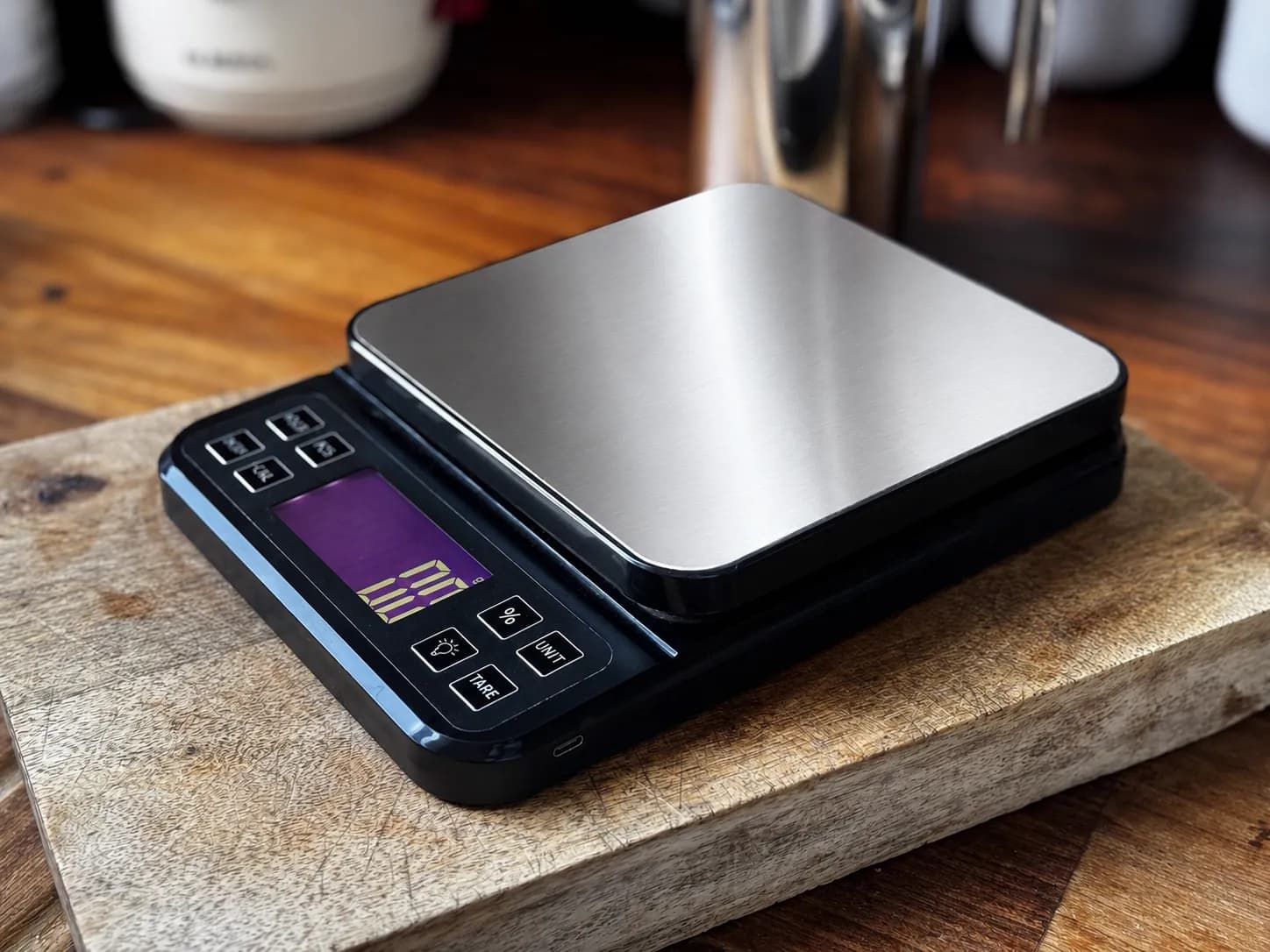
Digital scales
BOMATA · 0.1g precision · 5kg · USB-C charging
Pizza is a batch job, and a batch only works out if you weigh it.
The flour, water, salt and yeast are the same argument as any other dough. What is different is the end of the mix: the dough gets divided into balls, and those balls should be the same size, so weighing is needed. However, if no one is paying you for your pizza, they're not going to complain if it's slightly smaller, and certainly not if it's bigger. So weigh dough balls, or don't - it's up to you
The catchThe tare button sometimes needs a second press before it re-zeroes
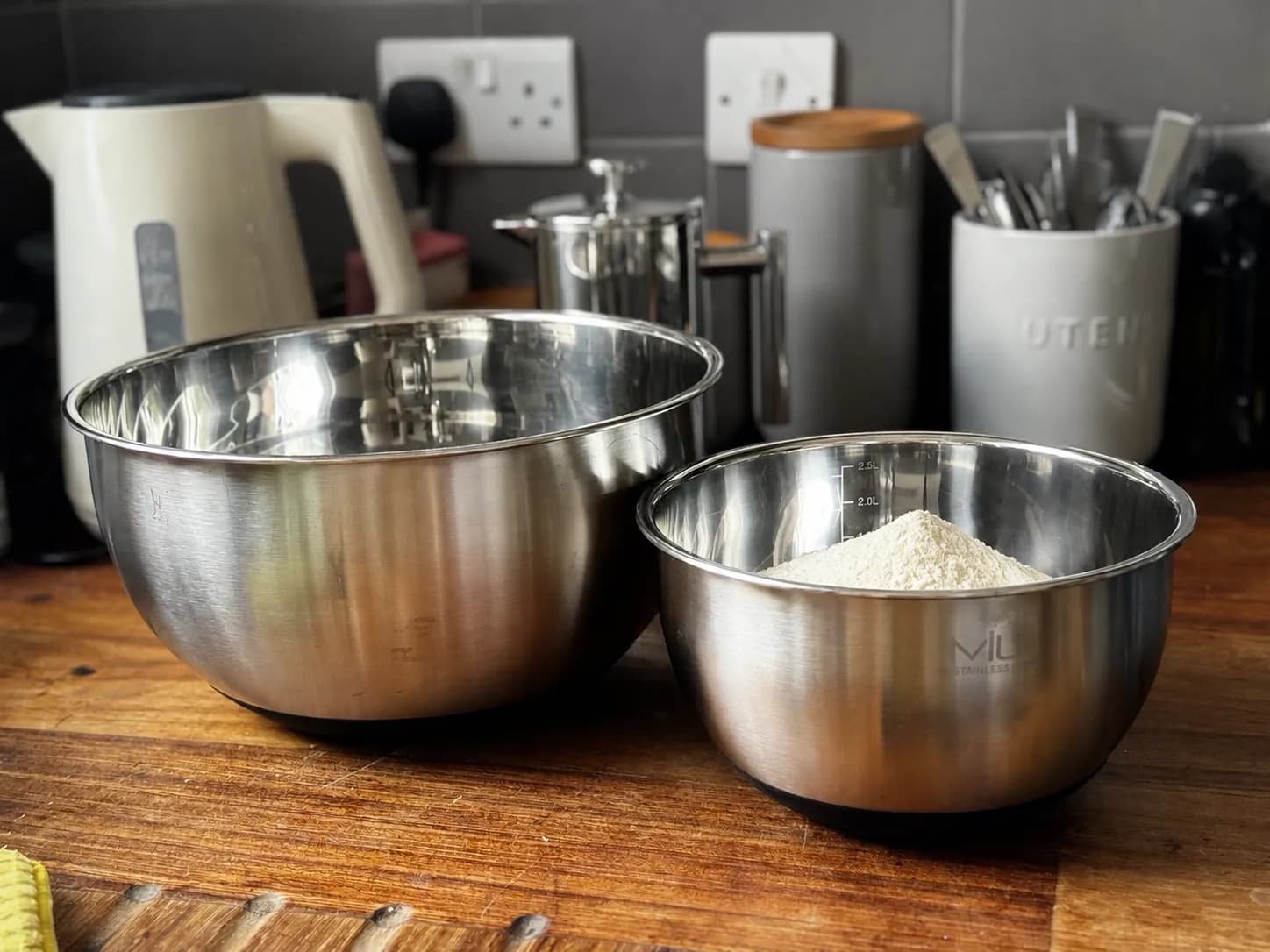
Wildone · stainless steel · five nesting bowls with lids
A pizza batch can be a lot more dough than a loaf, so the big bowl is the one that matters.
Eight pizzas is four or five times the dough of a single loaf, and all of it sits through the bulk prove in one bowl before anything is balled. That is the job here: the largest bowl in a set, with room for the dough to double and a lid so the surface does not dry. The smaller ones hold what you have weighed out.
The catchFive bowls, and realistically you will use two for baking
Whatever you own will do, as long as one of them is genuinely big.
Three years of use, dishwasher every time
BudgetGood gift
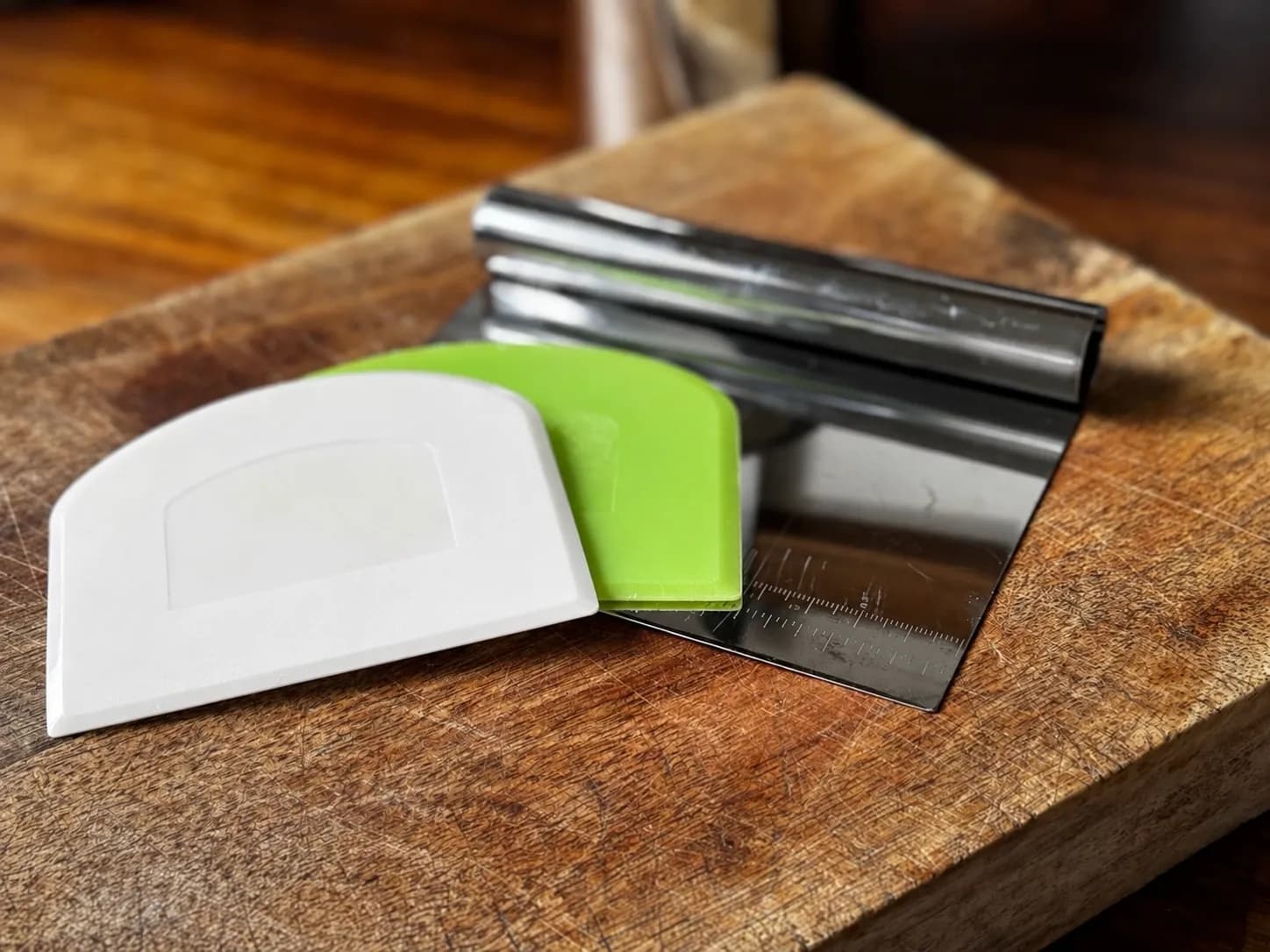
Dough scrapers
Vicloon · rigid steel for the bench · curved flexible plastic for the bowl
Two scrapers, two jobs, and pizza night uses both.
The plastic one works in the bowl. Hands and scraper together take a shaggy mix to a dough that holds itself, and the scraper is what gets the dough off your fingers and off the sides. The steel one comes out at the end, to cut the mass into pieces for balling, where a clean cut matters more than it does for one loaf.
The catchThe plastic scrapers are stiffer than ideal for a straight-sided bowl
Buy the set rather than one of them. Both are in use on the same night.
02
Prove. Two hours out, two days in the fridge.
The long cold prove is where the flavour comes from, and where the fridge space goes.
If fridge real estate is scarce, make sure you buy the size that fits
Budget
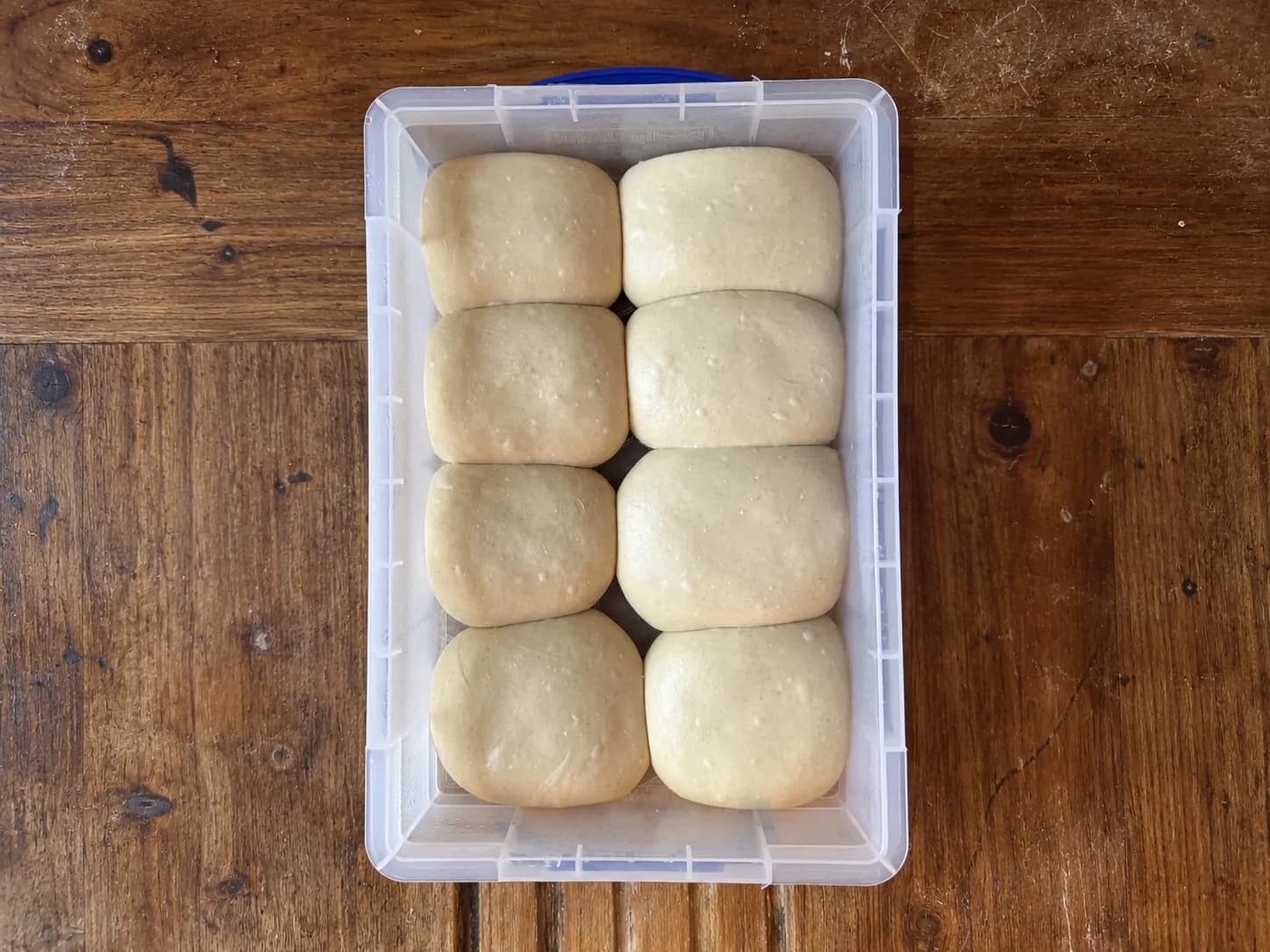
Dough ball box
Plastic storage box sized for A3 paper, with a lid.
The balls go into the fridge for two or three days, and they need somewhere flat.
My dough gets about two hours at room temperature and then 48 to 72 hours cold, which is where the flavour comes from. What that needs is a shallow lidded box that takes the balls in a single layer and fits a fridge shelf. Anything from one ball to eight goes in the one I use, which matters on a night when you decide to make more.
The catchNo moulded slots, so pieces that touch will spread into each other and come out square
Shallow, lidded, and big enough for the batch you actually make.
03
Launch. One movement, no shuffling.
Most first pizzas are lost between the bench and the oven floor.
Wood can retain damp. This wipes dry and launches perfectly every time.
Buy firstMid rangeGood gift
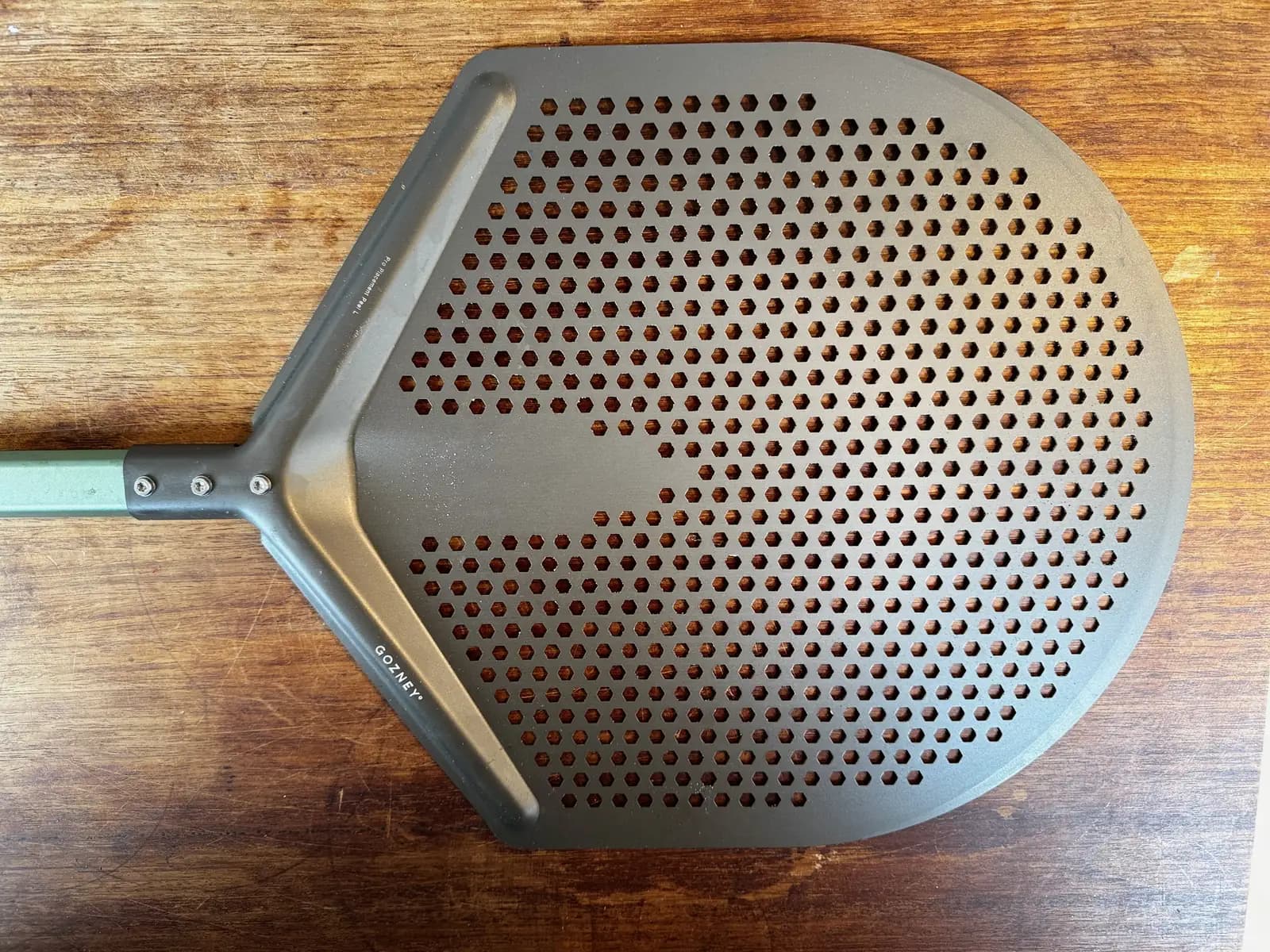
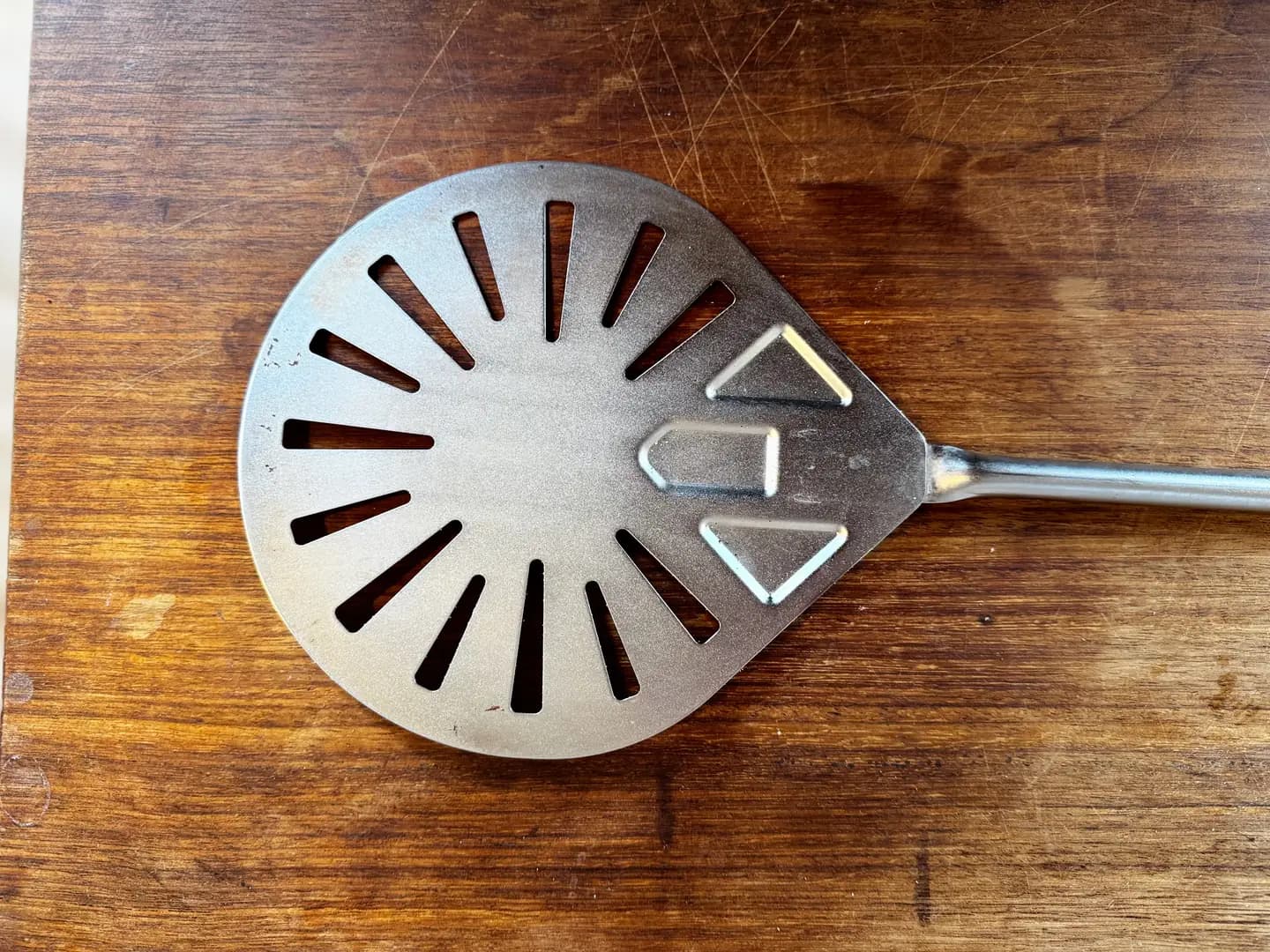
Launching peel
Gozney Pro Placement Peel, 14 inch. Perforated aluminium blade, coated, long handle.
Ideally, the pizza has to leave the peel in one movement, or issues can ensue!
This is where a first pizza is usually lost. A perforated, coated peel needs less flour under the base, and any flour there is falls through rather than burning on the oven floor. If you're buying separate from the oven and perhaps from a different manufacturer, match the size to your oven mouth rather than to the pizza you imagine making: a peel that will not fit through the opening is no use to anyone.
The catchSize has to match the oven opening rather than the pizza, and a peel that won't fit through is no use
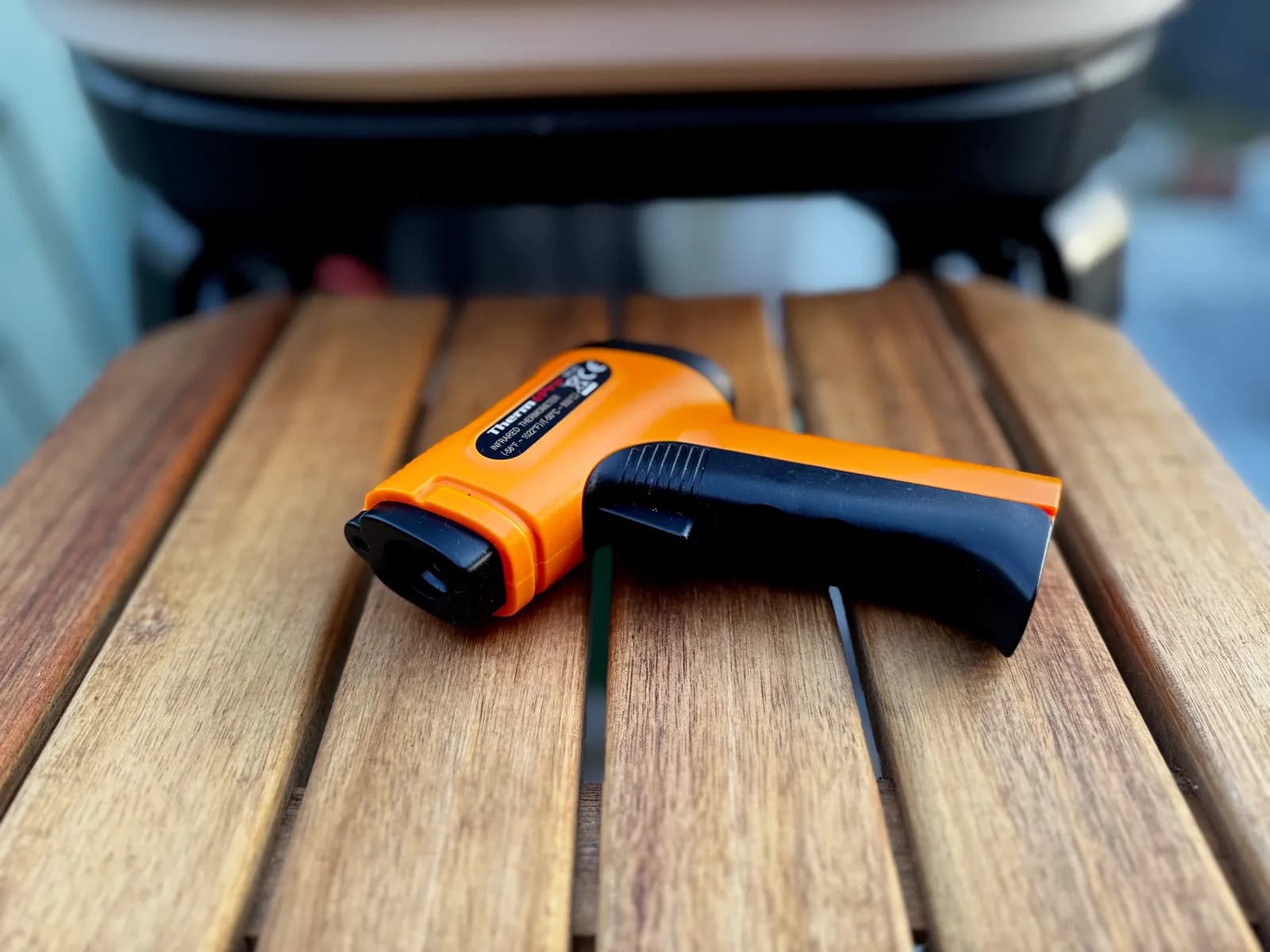
The most important temp is the oven stone, this is the ideal tool to measure it.
There are many ways to spoil a pizza, and temperature, either too much or too little of it, is one of the biggest culprits. Point this thermometer at the deck before the first launch, and point it at the same spot before the next one: where a pizza has just been is colder than the stone around it, and a base landing on that patch will not bake like the one before it. And an oven stone hotter than the oven air temp will burn the base before the top is cooked, and vice versa.
The catchBattery powered, and mine is still on its first set, but if pizza is an occasional thing you'll pick it up on the day and find it flat. Worth checking the night before rather than with dough proving
Knowing the surface is ready, and knowing when it's ready again.
Thirty seconds of checking saves the pizza from under or over cooking.
Useful for more than just pizza too!
Buy firstBudgetGood gift
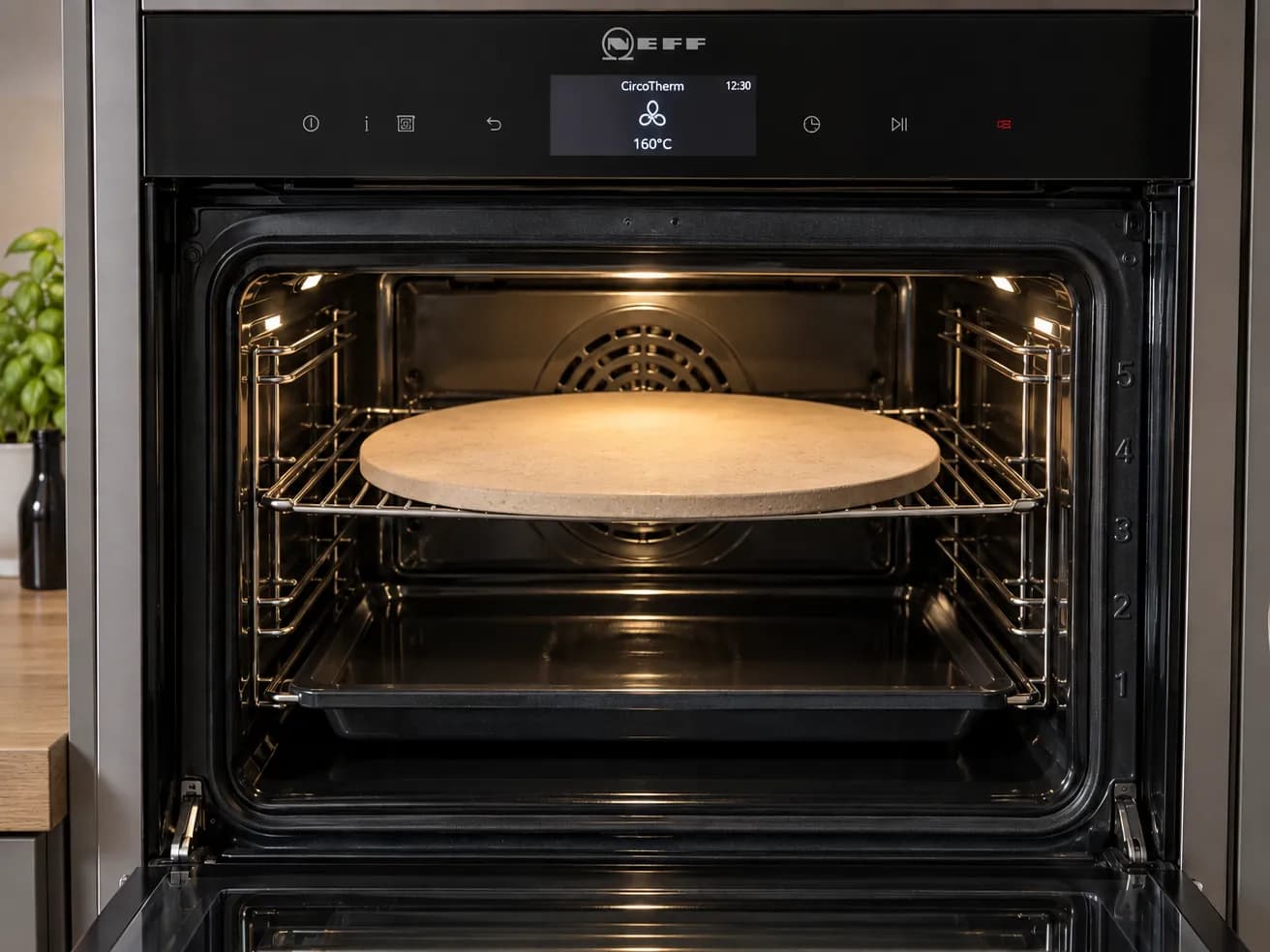
Pizza stone
Unicook round cordierite stone, 30.5cm.
The cheapest route to a decent base, and the one I used for years.
A stone on a shelf in a domestic oven, given a long preheat, gets you a great New York style pizza: a longer bake at a lower heat, and a base that crisps rather than steams. It will struggle to give you an authentic Neapolitan, and no amount of preheating changes that. If you are finding out whether pizza is a habit, this is the thirty pounds to spend first.
The catchWants a far longer preheat than seems reasonable, and disappoints if it doesn't get one
Perfect starting point, but preheat it far longer than feels reasonable
Let the deck saturate. Half an hour, maybe forty minutes.
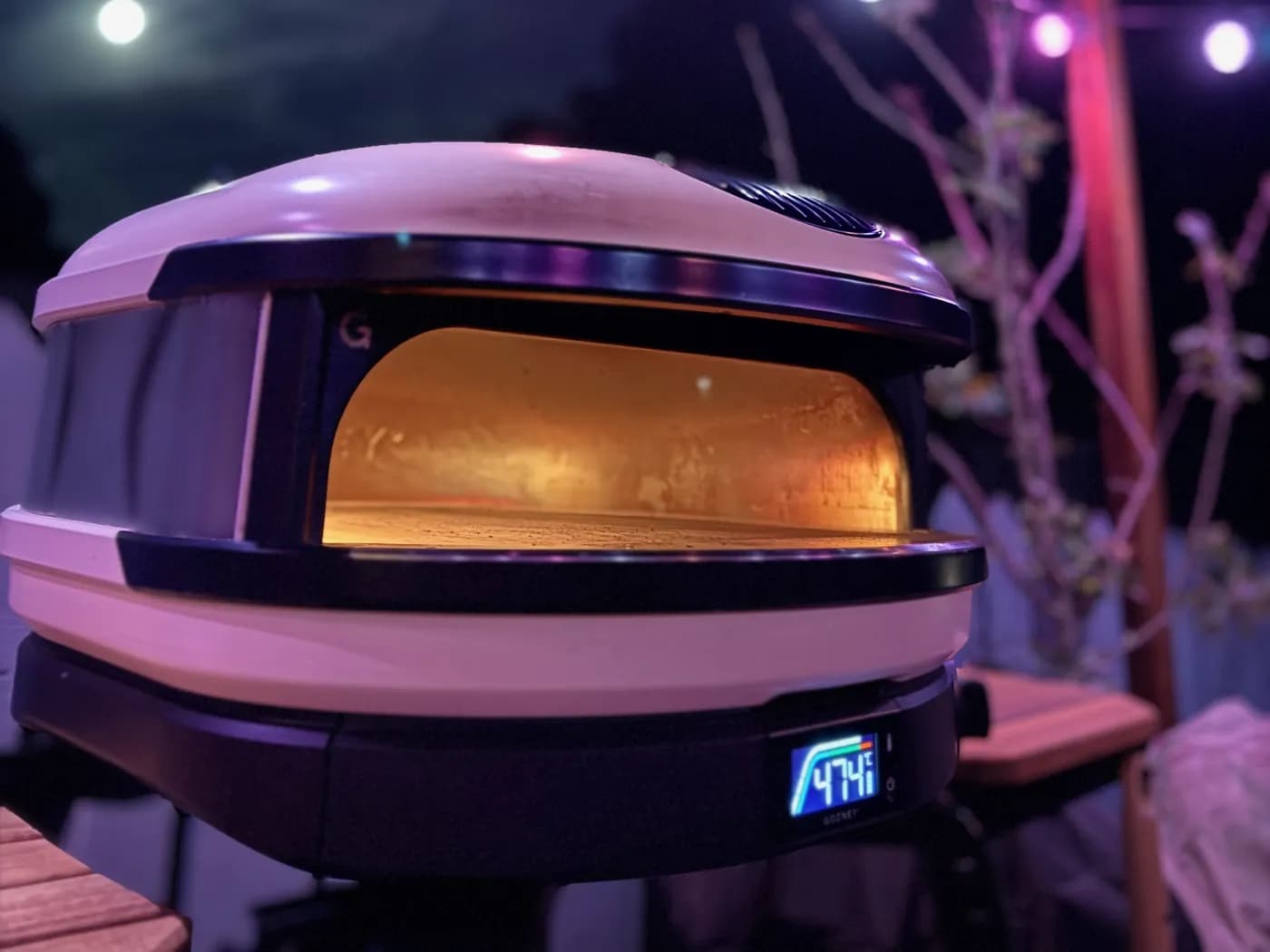
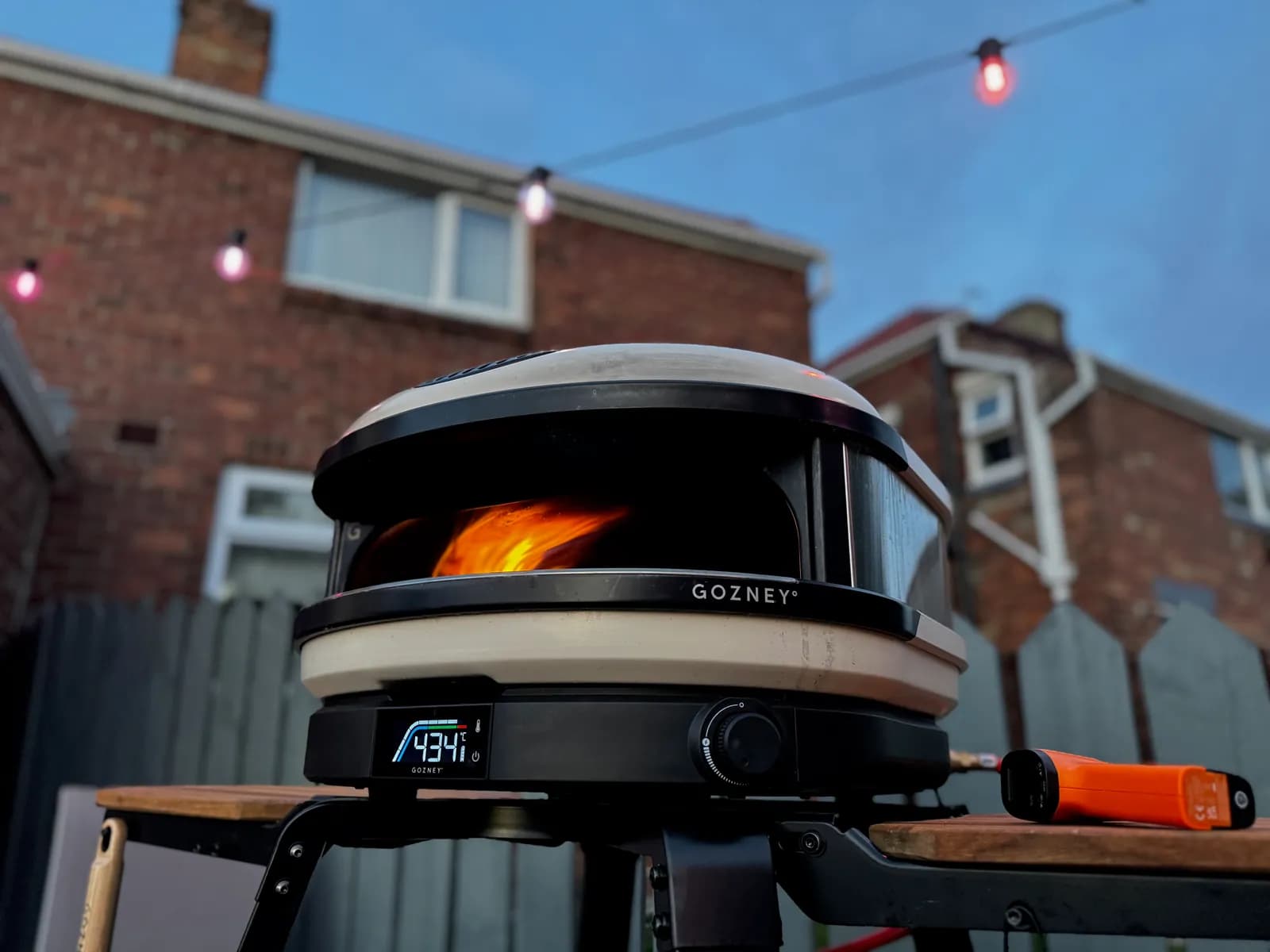
Just over a year old, and it lives outside under a cover.
Premium
Arc XL pizza oven
Gozney Arc XL in Bone, gas only. Larger cooking surface than the standard Arc; own stand and cover available.
The only thing here that does a real Neapolitan, and the last thing you should buy.
Ninety seconds at a temperature no kitchen oven reaches is the whole point, and it is the only way to get the bake and the spotting that go with it. What you are buying alongside that is an hour of preheating before the first pizza, a gas bottle, somewhere outside to keep it, and a cover. It turns pizza into an event, and if that's what you're looking for, then a pizza oven is the answer.
The catchThere's no door, so it loses heat faster than if it were an enclosed oven. That's what the thirty or forty minute preheat is really about, and it's most of an hour you have to plan around
Buy it when pizza has become a habit, not to find out whether it will be.
Mid rangeGood gift
Turning peel
Gozney Balance turning peel. Small round blade, long handle.
The second peel, and the second skill. Not for your first night.
In a ninety-second bake, the pizza has to be turned repeatedly because the side facing the flame cooks faster. A turning peel does that quickly, but it's quite a skill to master. Until you do master it the launching peel will lift the pizza to the mouth of the oven, where you can turn it by hand and put it back, no one will know and the pizza tastes the same regardless - so make your first foray into pizza less stressful and start with the launching peel method to turn.
The catchIt's a skill, and an awkward one for the first few attempts
Turning a bake that's over in a couple of minutes, without taking it out.
Worth owning. Worth learning second.
05
Serve. Off the deck and onto a board.
The last two minutes decide whether the crust cuts cleanly or tears.
Buy firstBudgetGood gift
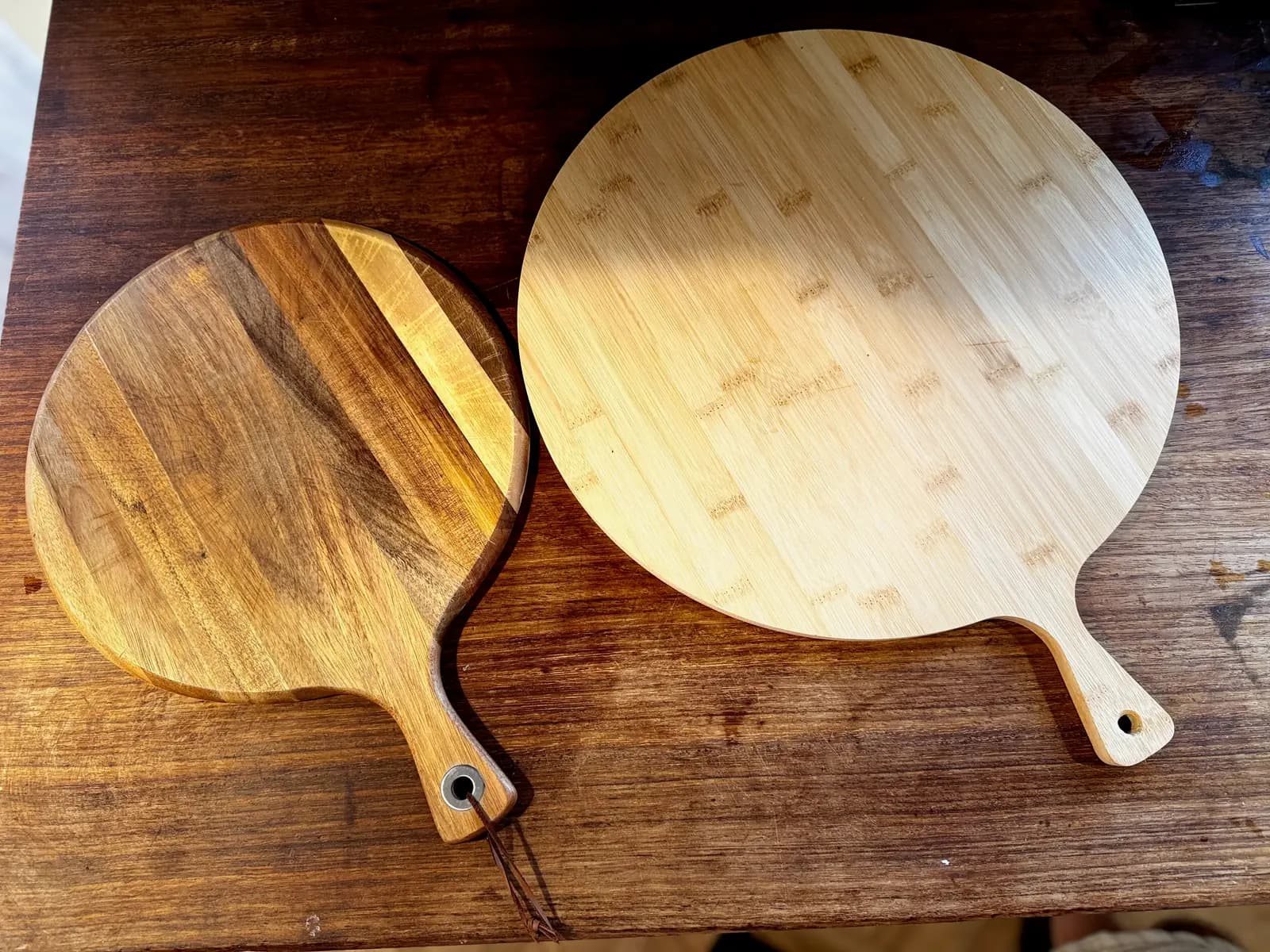
Wooden pizza boards
Circular wooden board, 16 inch. Mine are 16 inch and 12 inch.
Two boards minimum. Three if you are feeding a group.
A pizza comes out every couple of minutes and has to go somewhere immediately, and the board it lands on is also the board you cut and serve from. One board means waiting for it to clear while the next pizza sits in the oven going dark. Two means the rhythm holds. Three means nobody is standing in the kitchen with a peel in their hand wondering where to put the next cooked pizza!
The catchToo small and the crust won't cut cleanly, which you only discover in use
Carrying a finished pizza indoors, then cutting and serving from the same board.
Bigger than the pizza, and more of them than you think.
Mid rangeGood gift
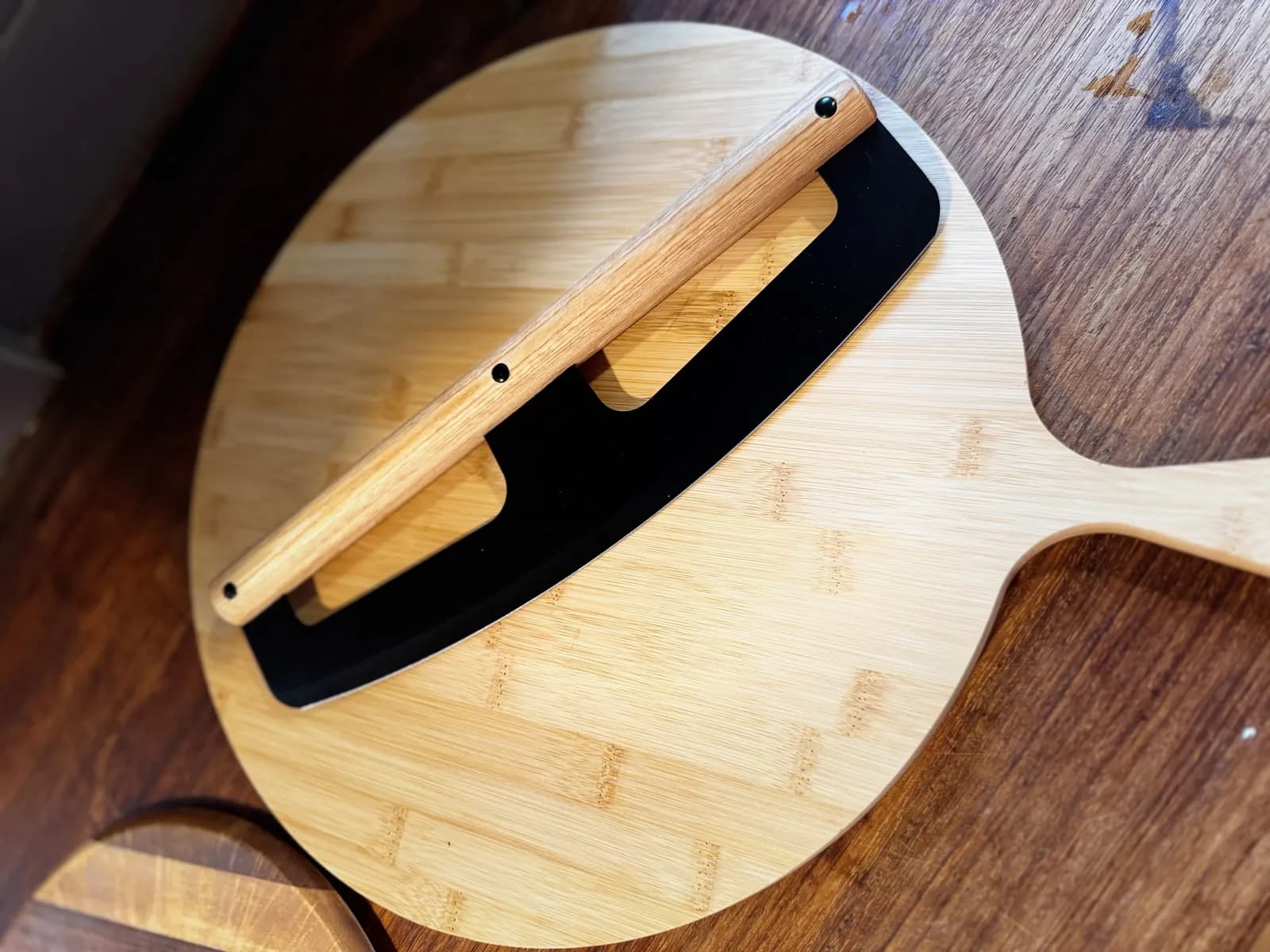
Rocker cutter
Gozney pizza rocker. Stainless curved blade, two handles.
The one thing on this page you can safely skip.
A rocker cuts a straight line in one press, and if the first pass does not go through, the second follows the same line rather than opening a second one beside it. That is the case for it. The case against is that a large chef's knife does the same job, and you already own a knife and a pizza wheel is almost certainly cheaper, not as cool, but still effective.
The catchBulky to store, and awkward in a drawer unless you hang it
Buy it because you want it, not because the pizza needs it.
Common questions
Do I need an outdoor pizza oven?
Not for good pizza. A stone in a domestic oven, fully preheated, makes a decent Detroit or New York style base, and that is what I used for about five years. What a domestic oven cannot do is traditional Neapolitan: high heat, ninety seconds, and the leopard spotting that comes with it. If that is what you are after, nothing in a kitchen oven will match what comes out of a dedicated pizza oven.
What is the one thing that makes the biggest difference?
Pre-heat where the pizza touches. Whether that is a stone on a shelf or a stone in a gas oven, it has to be properly saturated with heat before the first launch, which takes longer than you think, and it has to be back up to temperature before the next one.
Stone or steel?
I have only owned a stone, so I cannot tell you from experience. What I can tell you is that a stone at around thirty pounds changed my pizza more than anything else I bought, and that I would buy a square one next time so it holds bread as well as pizza.
Do I need two peels?
No. Start with the launching peel, which will also lift a pizza to the mouth of the oven so you can turn it by hand. A turning peel is a second skill to learn, and it is worth learning once the rest of the process has stopped demanding all of your attention.