Best Chocolate Making Classes in the UK
Chocolate classes are surprisingly easy to book badly. Two sessions described as a chocolate making experience can turn out to be completely different things. One might have you tempering couverture, filling moulds and taking home a box of chocolates you have made yourself. Another might be a chocolate-focused day at a general cookery school that teaches bread one day and knife skills the next. Either can be excellent. But they are different purchases, often at very different prices.
At the time of writing we hold 73 UK schools running chocolate making classes. Having researched all of them, we found that the important differences are actually fairly consistent. Work out what sort of experience you want first, and choosing between them becomes much easier.
What you are actually booking
A chocolate specialist works with the stuff every day. Its classes tend to concentrate on the craft itself: tempering, moulding, fillings and finishing. At a general cookery school, chocolate is normally one part of a much broader programme, often taught as a full day with lunch alongside a timetable that might otherwise cover bread, pastry and knife work.
There is no better option between the two. Specialists generally put more chocolate in your hands and concentrate more heavily on chocolate-specific technique. Cookery schools offer proper teaching kitchens, chefs accustomed to teaching every week and, often, the option of coming back to learn something completely different.
There is one thing we would look for in either case: tempering.
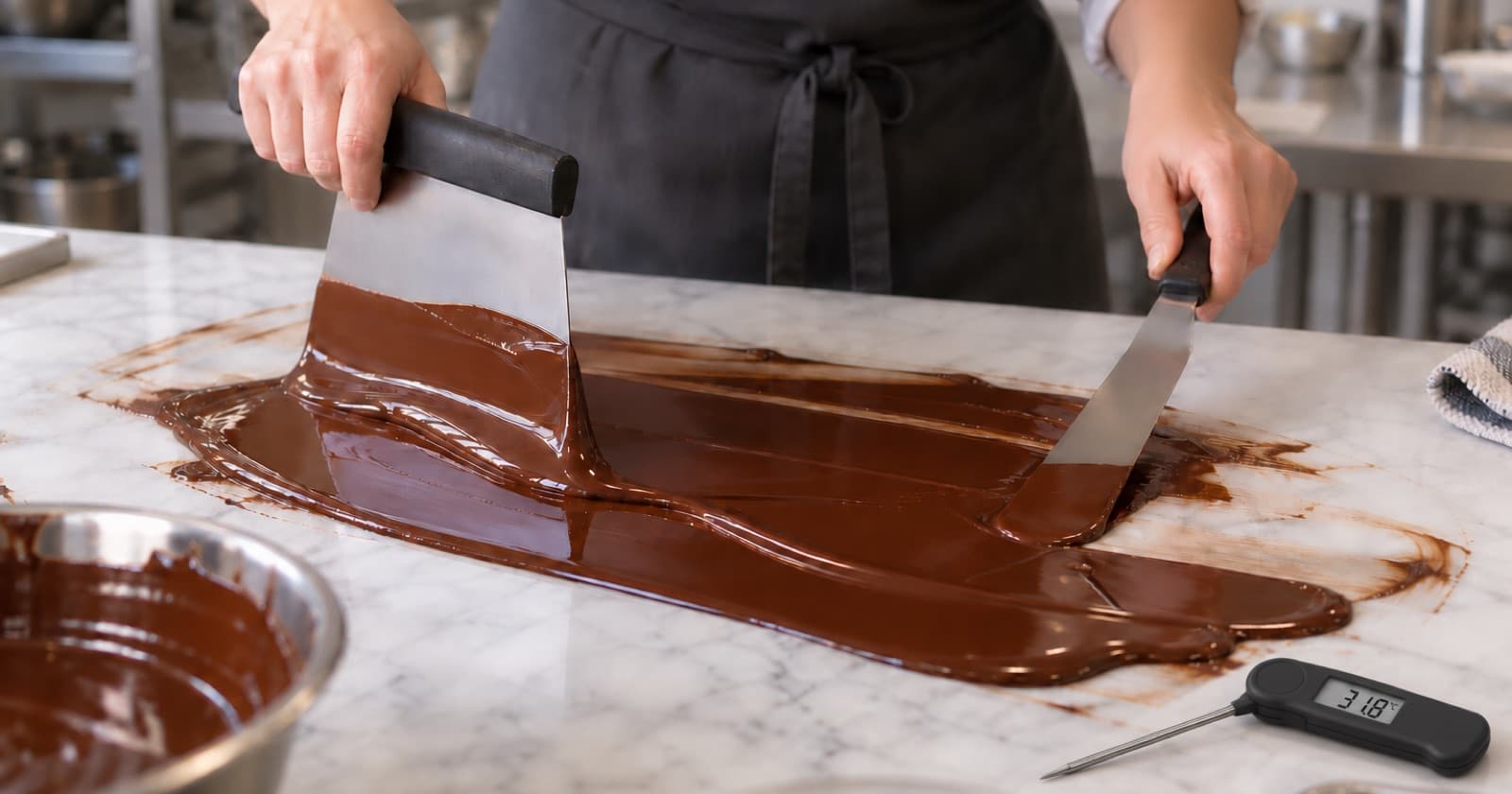
It is the technique that makes the difference between chocolate that sets dull, soft or streaky and chocolate that comes out glossy, snaps properly and stays firm at room temperature. The skill is in controlling the temperature so that the cocoa butter crystallises correctly. More importantly, it is something you can learn in a class and repeat at home.
A specialist chocolate course will normally include tempering. A general chocolate-themed session might not. If learning the technique matters to you, make sure it appears explicitly in the class description before booking.
Tempering at home needs less kit than people expect. A digital probe thermometer to see what the chocolate is actually doing, and Callebaut callets to practise on, covers it. William Curley's book is a good next step once the technique holds.
Chocolate classes in London
London has the biggest concentration of schools, so the chocolate classes in Greater London are a natural starting point if you are already in the capital.
Melt Chocolates is one of the dedicated specialists, with classes from £55* and a 4.9 rating from 1,282 reviews. Bread Ahead Bakery, Borough Market is the outlier for sheer scale: 35 classes on its timetable, prices starting at £45 and 2,676 reviews, the highest review count in our chocolate set. Prestige Patisserie has six classes from £85 and a 4.9 rating, with its classes leaning more towards the pastry side of chocolate work.
There are also bakery schools where chocolate sits within a wider pastry programme. Miel Bakery has six classes starting at £130, the highest entry price among the schools here, while Comptoir Bakery Bermondsey lists eleven from £105. These make more sense if you already bake and want to add chocolate techniques, rather than simply looking for a chocolate day out.
If chocolate is only part of your plans, our guide to baking classes in London compares the city's wider choice of schools, prices, booking and how quickly places disappear. You can also browse everything we list across Greater London.
The rest of the country
Chocolate specialists are much less tied to London than schools in some other categories. In fact, several of the best-rated options in our records are nowhere near the capital.
The south
Chocolate Craft in Alresford has six classes from £35 and a 4.9 rating from 150 reviews, with more options available across Hampshire.
In Woking, The Chocolate School lists eight classes from £55 and has a 5.0 rating across 146 reviews, giving Surrey an unusually strong choice for its size.
Hollychocs in Devizes has eleven classes starting at £25, making it one of the broader specialist programmes we hold. Rosie's Chocolate Factory in Reading is an option in Berkshire, while Mrs Bun the Baker in Wallingford has eight classes and a 5.0 rating, making it one to consider in Oxfordshire.
The west
Ashburton Cookery School & Chefs Academy starts at £110 and is firmly at the full-day teaching end of the market rather than the short-workshop end.
Devon Cookery School in Cullompton starts at £50 and has thirteen classes. Both schools carry 5.0 ratings based on more than 340 reviews each, an unusually consistent showing for Devon.
Cooking It in Bristol offers seven classes and has a 4.9 rating. Further south, Peppina Sicilian Bakery in Dorchester starts at £65 and represents Dorset in our selection.
The north
Lab Cocoa in Grimsby has eighteen classes listed, more than any other chocolate specialist in our records, alongside a 5.0 rating from 141 reviews. A programme of that size also usually means more choice of dates, which matters if you want to book within the next few weeks rather than months ahead.
North Yorkshire has one of the strongest selections outside southern England. Crofts Chocolates in Scarborough offers three classes from £25. It works with handmade Belgian chocolate and is gluten free throughout, which is still not easy to find.
Mocha, Aske, near Richmond, has eight classes and a 4.7 rating, while The Cookery School at the Grand, York lists twelve from £85.
Further north again, The Canny Chocolate Company in South Shields has five classes from £30 and a 4.9 rating. In Manchester, Food Sorcery Cookery School, Didsbury takes the cookery-school approach, with chocolate taught in a full-day format starting at £120.
The east
Maldon Chocolates in Hunstanton starts at £75 and is an option in Norfolk. The Chocolate Kitchen in Retford has eight classes and a 4.8 rating from 114 reviews.
If none of these is within sensible travelling distance, our guide to baking classes outside London looks at the broader choice across all the subjects we cover.
How long, and how much
Price gives you a surprisingly good idea of what sort of class you are looking at.
Below roughly £40, expect a shorter workshop, commonly around two hours and focused on one thing such as truffles, bars or a seasonal chocolate product. Once prices move beyond about £100, you are generally looking at a full teaching day, often including lunch and covering a broader range of techniques. Most specialist half-day sessions fall somewhere between the two.
The size of the school's programme gives you another useful clue. A school listing eighteen classes is likely to have dates coming up regularly. A school with one or two may only run them occasionally. That makes a considerable difference when you are trying to fit a class around a particular weekend.
Decide which experience you actually want before comparing prices. A two-hour truffle workshop can be every bit as enjoyable as a full day learning tempering, but it will disappoint if you booked it expecting the latter.
Buying it for someone else
Chocolate works particularly well as a class to give as a present. Unlike many baking courses, the recipient is likely to come home with something that can be shared rather than a loaf that has disappeared a few days later.
There are two things we would check before buying.
The first is availability. Someone else's diary is much easier to work around when a school runs a dozen dates a year rather than two. Maldon Chocolates illustrates the problem: we hold a single class in our records. If that date works, it can make for a good day on the Norfolk coast. If it doesn't, an open-dated voucher is likely to be the safer choice.
The second is what is included in the advertised price. Ingredients, use of an apron and packaging for the chocolates you make are often included, but not always. A cheaper-looking class can end up costing much the same once extras are added.
Our guide to baking classes as gifts goes further into the practicalities, including vouchers when you do not know which date the recipient will want.
Ask what you take home
If we could ask a chocolate school only one question before booking, it would be this: how much chocolate do I actually take home?
The answer can reveal more about a session than its marketing description.
Some classes finish with a proper box of chocolates you have made yourself, ready to take away. Others are shorter or contain more demonstration, leaving you with a few finished pieces and perhaps a recipe sheet. There is nothing wrong with either format, but they represent noticeably different experiences at what can be similar prices.
If the booking page doesn't make it clear, ask. One short email can tell you exactly what you will make and what you will leave with.
It is also the right time to mention allergies. Nuts and dairy are commonplace in chocolate kitchens, and schools vary considerably in what they can safely accommodate. Find that out before paying rather than when you arrive.
Find a chocolate class
Browse all the chocolate making classes we hold. If you would rather learn several techniques in one session, take a look at cake decorating and pastry as well. For other subjects, our guides to sourdough classes and cake decorating classes use the same approach to compare what's available.
Our chocolate coverage remains thinnest in Scotland, Wales and Northern Ireland. If you run chocolate classes in any of those areas, we would like to hear from you.
* Prices, ratings, review counts and class numbers were correct at the time of writing and may change.
Everything in this guide reflects what we held when it was written. Schools add and drop classes, adjust their prices and occasionally stop running them altogether, so check directly with the school before booking.
These are affiliate links - if you buy through them we earn a small commission at no extra cost to you. As an Amazon Associate, BakeClass earns from qualifying purchases.